


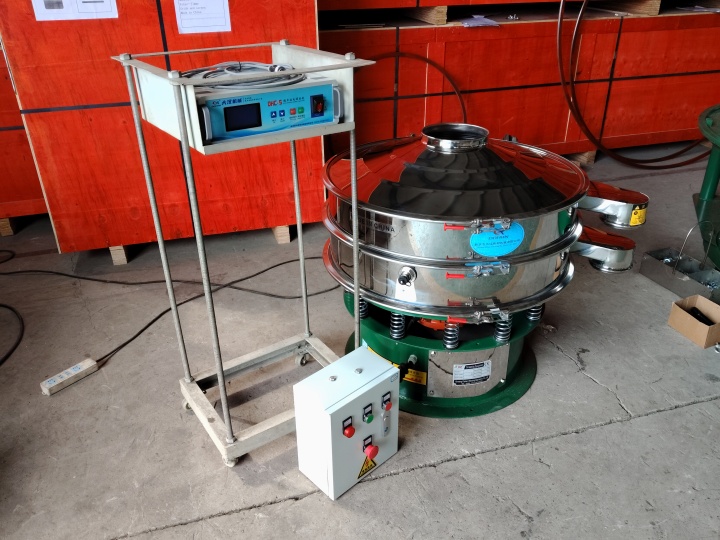
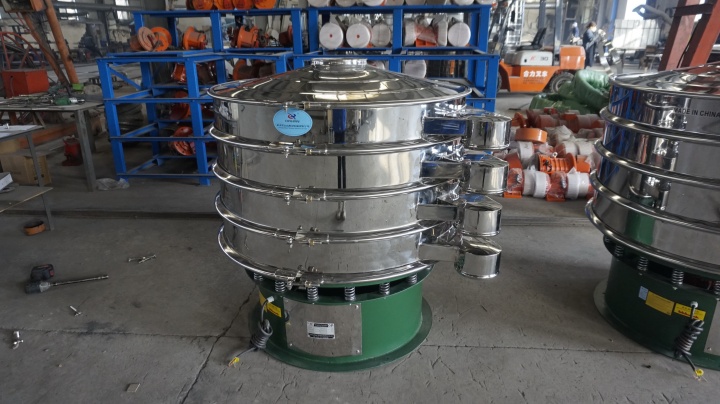
The industrial metal powder rotary sieve machine is a high‑precision rotary vibrating screening system purpose‑built for metal additive manufacturing.
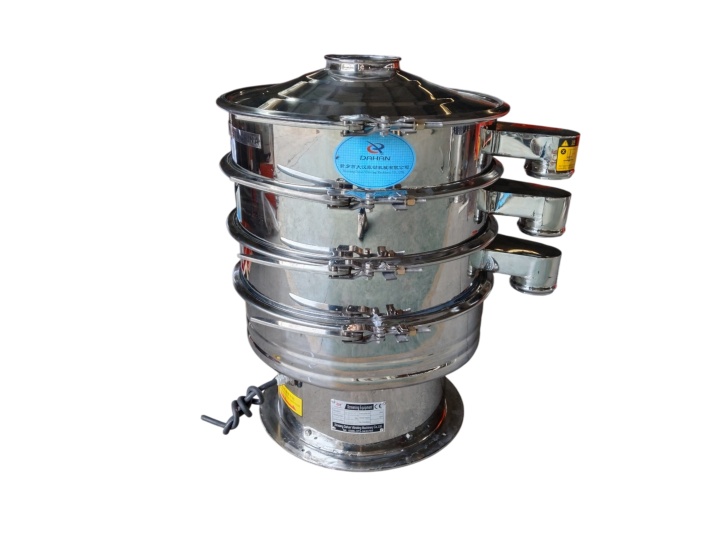
Driven by 3‑D eccentric‑weight vibration, this closed‑loop sieve classifies fine reactive metal powders while removing spatter, agglomerates and foreign contaminants. Equipped with inert‑gas sealing, ATEX‑compliant explosion‑proof assembly and ultrasonic anti‑blinding module, it effectively prevents powder oxidation, dust explosion and mesh clogging when processing titanium, aluminum, stainless‑steel and superalloy powders.
This machine uses 3D vibration to move powder across the screen and separate fine powder from clumps.
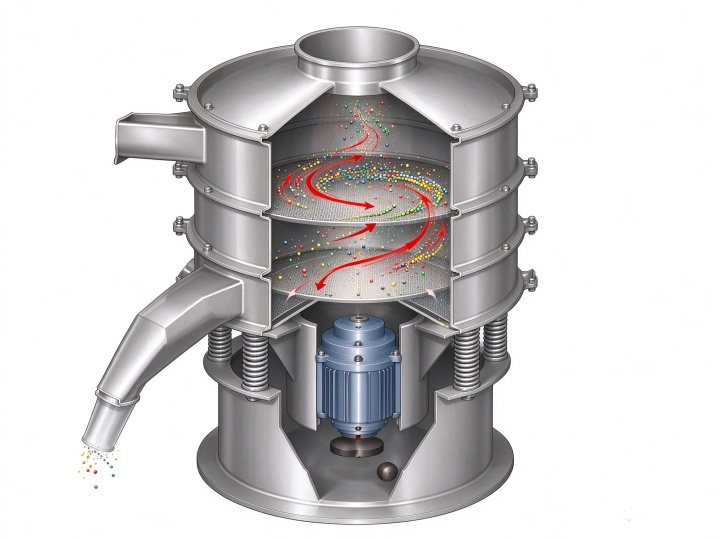
The Rotary Sieve Machine runs on 3D vibration powered by eccentric weight motors fitted at the top and bottom of the vibration shaft. The spinning weights create horizontal, vertical and angled movement. This makes powder spread in a spiral path over the screen. Good fine powder passes through the ultrasonic mesh, while large clumps and spatters exit through the oversized outlet.
Every key part forms a fully sealed system to protect metal powder with inert gas during the whole process.
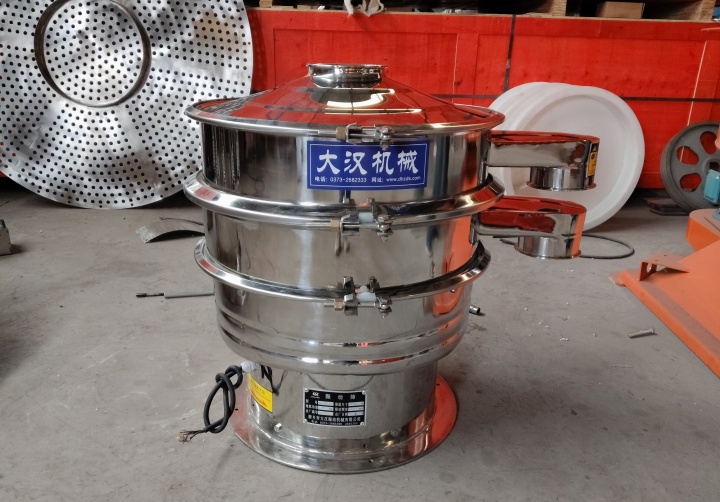
Our industrial metal powder rotary sieve machine adopts multiple targeted technical upgrades to solve the common pain points in fine metal powder screening, including powder oxidation, explosion risks and mesh clogging, ensuring stable, safe and high-efficiency powder classification.
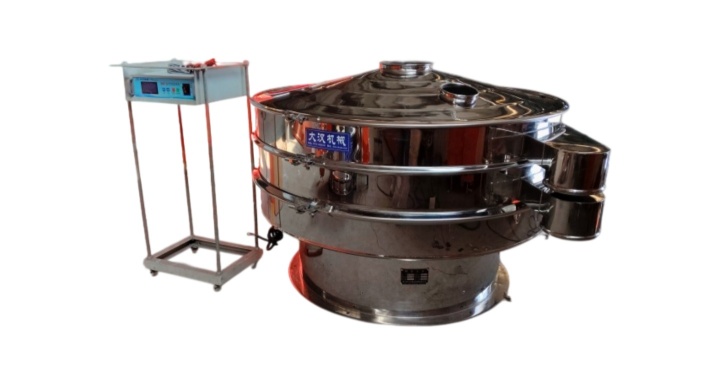
Inert Gas Protection & Vacuum-Tight Closed Loop: To prevent oxidation and contamination of active metal powders, the machine features a fully sealed gas-tight housing. It supports continuous nitrogen (N₂) or argon (Ar) purging during operation, keeping oxygen levels below controlled safety thresholds (e.g., < 100 ppm) throughout the sieving cycle.
Full Explosion-Proof & Static Elimination Safety Design: Designed for hazardous powder environments, the system integrates ATEX/IECEx certified explosion-proof motors, flameproof junction boxes, conductive static-grounding copper leads, and explosion-venting or pressure-resistant chamber options.
Ultrasonic De-blinding System for Fine Powders: Sieving fine metal powders below 45 μm (325–500 mesh) often causes mesh blinding due to electrostatic attraction and surface tension. Our integrated ultrasonic transducer applies high-frequency, low-amplitude vibration directly to the screen frame, preventing clogging, increasing throughput by up to 300%, and extending mesh service life.
Below are the standard engineering parameters for Xinxiang Dahan Machinery Rotary Vibrating Screens adapted for 3D printing metal powder classification:
| Parameter / Model> | DH-400 | DH-600 | DH-800 | DH-1000 | DH-1200 |
| Screen Diameter (mm) | 400 | 600 | 800 | 1000 | 1200 |
| Effective Screen Diameter (mm) | 350 | 560 | 760 | 930 | 1130 |
| Mesh Range (Mesh) | 2 – 500 Mesh | 2 – 500 Mesh | 2 – 500 Mesh | 2 – 500 Mesh | 2 – 500 Mesh |
| Max Feed Granularity (mm) | 5 | 10 | 15 | 20 |
30
|
| Vibration Frequency (rpm) | 1500 | 1500 | 1500 | 1500 | 1500 |
| Contact Material Options | Stainless Steel 316L / 304 (Mirror Polish Ra 0.4 mum) | Stainless Steel 316L / 304 (Mirror Polish Ra 0.4 mum) | Stainless Steel 316L / 304 (Mirror Polish Ra 0.4 mum) | Stainless Steel 316L / 304 (Mirror Polish Ra 0.4 mum) | Stainless Steel 316L / 304 (Mirror Polish Ra 0.4 mum) |
| Explosion-Proof Rating | Exd II BT4 / CT4 | Exd II BT4 / CT4 | Exd II BT4 / CT4 | Exd II BT4 / CT4 | Exd II BT4 / CT4 |
| De-blinding Technology | Ultrasonic System (28–35 kHz) | Ultrasonic System (28–35 kHz) | Ultrasonic System (28–35 kHz) | Ultrasonic System (28–35 kHz) | Ultrasonic System (28–35 kHz) |
It has a top feed inlet for powder loading via positive pressure or vacuum. The chamber can remove air and fill inert gas to stop powder oxidation. Qualified powder falls into the bottom hopper and directly flows into storage containers or 3D printer bottles, so powder never touches open air.Different metal powders exhibit distinct chemical and physical properties. Our rotary sieve machines are specialized to handle demanding metal powders across key additive manufacturing sectors:
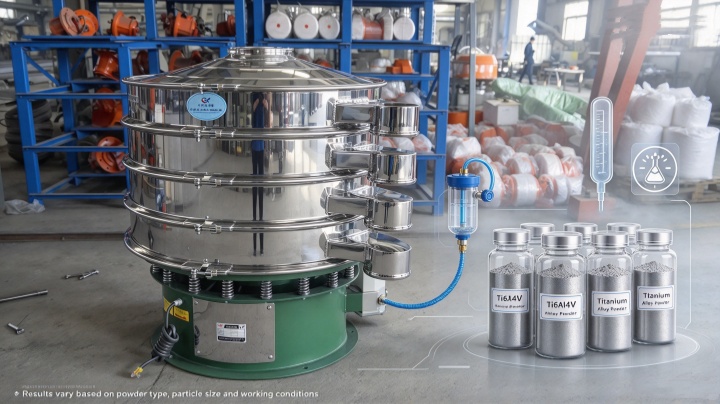
Titanium Alloys (Ti6Al4V, Ti-6242): Highly sensitive to moisture and oxygen. Sifter operates in fully sealed environments to prevent oxidation and maintain strict powder purity standards.
Aluminum Alloys (AlSi10Mg, Scalmalloy): Prone to static generation and high explosive risks. Built with comprehensive anti-static grounding and ATEX-compliant explosion-proof motors.
Stainless Steels & Tool Steels (316L, 17-4PH, Maraging Steel): Requires precise fraction classification and high throughput during reclaimed powder sieving.
Nickel Superalloys & Cobalt-Chrome (Inconel 625/718, CoCrMo): Heavy bulk-density materials handled through reinforced mesh screen supports and high-torque vibration exciters.
Pre-Print Powder Conditioning: Removing oversized spatter, agglomerates, and foreign debris from virgin powder batches.
Post-Print Powder Reclaiming: Closed-loop recovery of unused powder from Selective Laser Melting (SLM) and Direct Metal Laser Sintering (DMLS) build chambers.
Powder Production Line Screening: In-line classification for Plasma Atomization (PA), Gas Atomization (GA), and Rotary Atomization (PREP) processes.
The system utilizes a closed-loop pneumatic/gas-tight structure fitted with inflatable Viton seals. Before sieving begins, the system purges ambient air with inert gas (Argon or Nitrogen). Real-time oxygen sensor interlocks ensure the motor only operates when oxygen concentration drops below preset safety limits.
For Laser Powder Bed Fusion (LPBF / SLM), common powder cuts are 15–53 mu$m (approx. 270–500 mesh) or 20–63 mu$m. For Electron Beam Melting (EBM) or Direct Energy Deposition (DED), coarser cuts such as 45–106 mu$m (approx. 140–325 mesh) or 50–150 mu$m are used.
Yes. The sifter can be equipped with pneumatic conveying interfaces, hopper level sensors, and PLC communications (Modbus/Profinet) to integrate seamlessly into automated central powder management systems for multi-printer AM facilities.
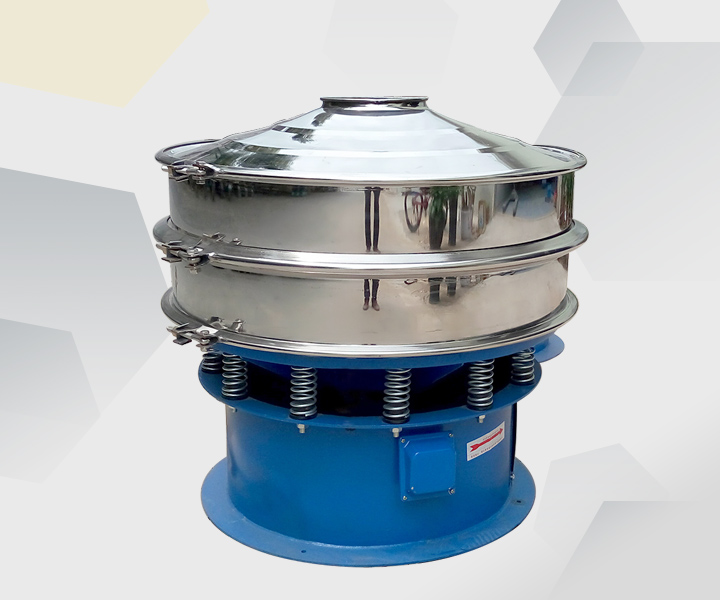
New development of sieving machine updates performance, increases fine material quantity and reduces price again. Quality D etails : 5 t/h pr...
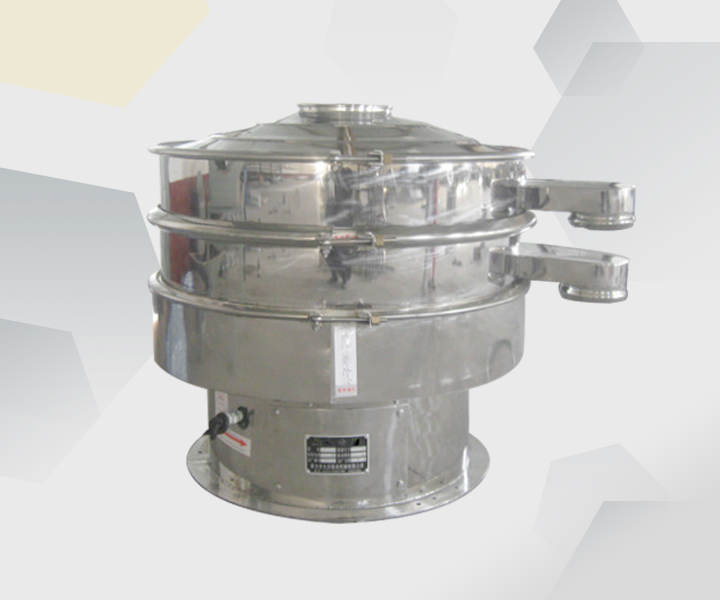
Vibrating sieveis to maintain the original model, improve wear resistance and maintain service life. Quality D etails : 10 tons handing capac...
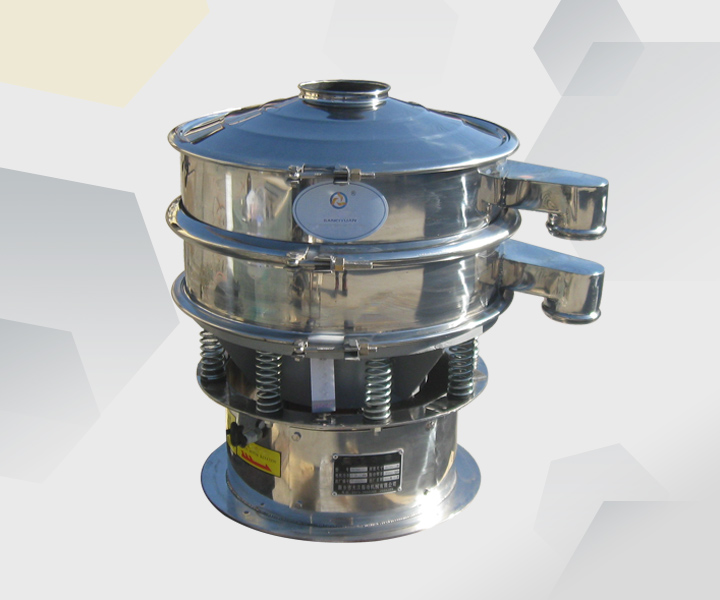
Industrial sifter response to the fine body solution in different industries quickly and effectively. Quality D etails : 2mesh granularity en...