


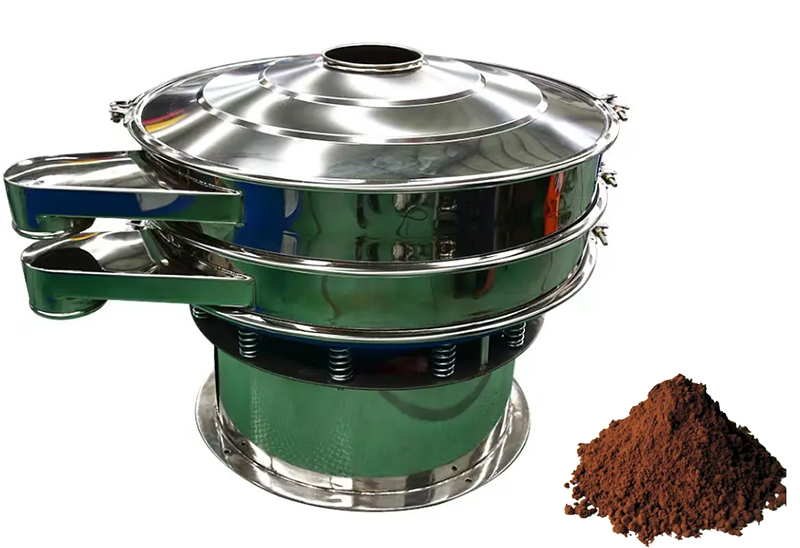
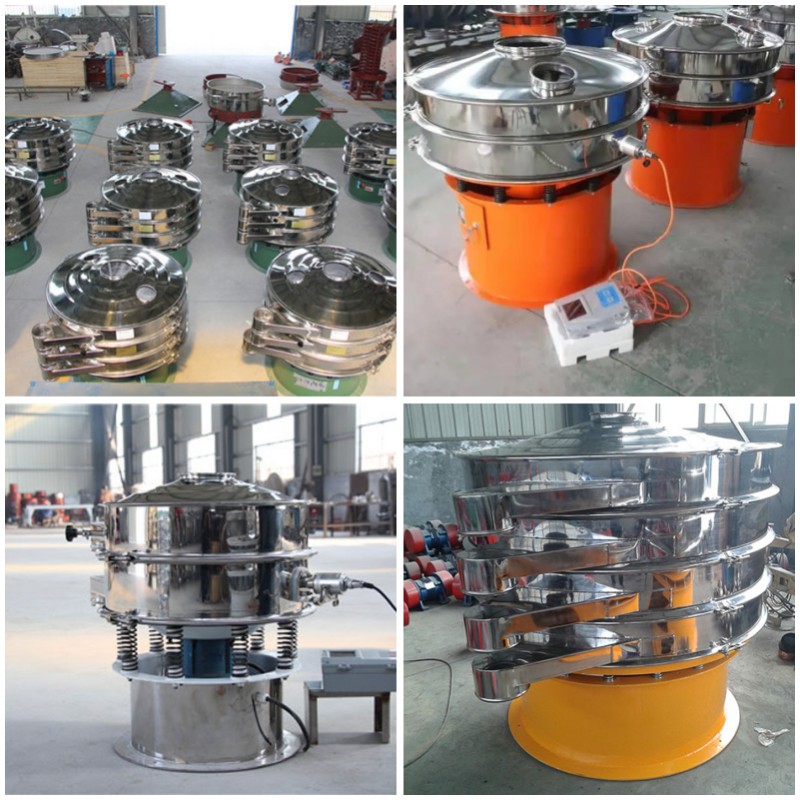
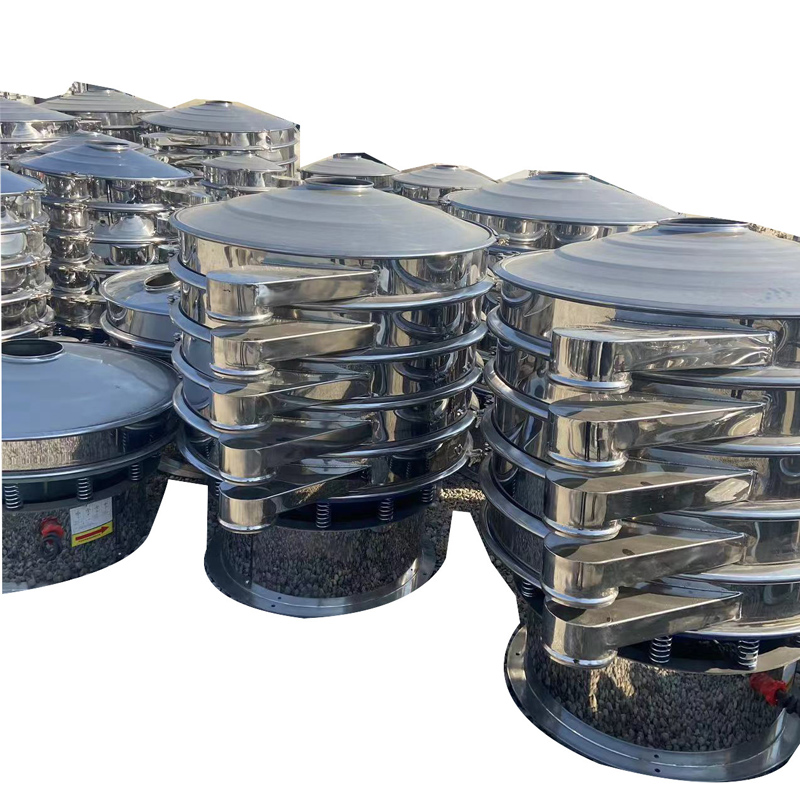
Vibratory screen separator for resin powder utilizes the excitation force generated by a vibrating motor to cause resin powder to undergo three-dimensional swirling motion on the screen surface, thereby achieving particle classification and impurity removal. Because resin powder is prone to static electricity, the equipment is typically equipped with anti-static designs, such as grounding devices or anti-static screens, to prevent powder from adhering to each other and maintain smooth flow. For dust control, the vibrating screen features a fully enclosed screen cover and seals, preventing dust leakage and maintaining a cleaner workshop environment.
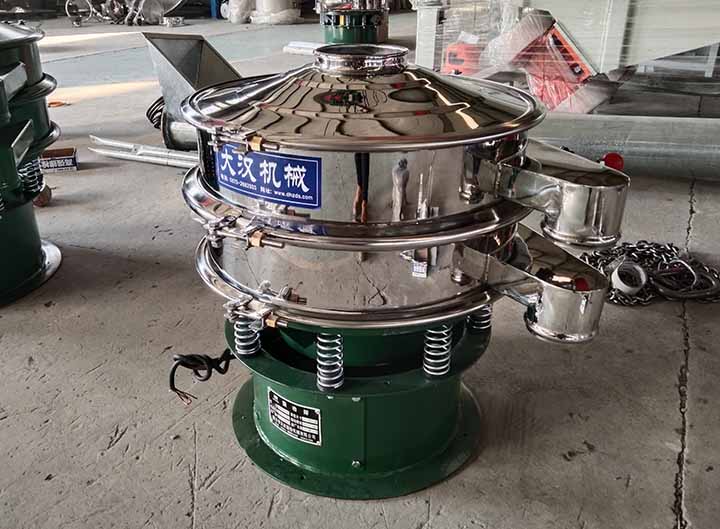
In terms of particle size, the equipment covers 20 mesh to 500 mesh, meeting the needs of powders with varying fineness. Processing capacity varies depending on the model; small units can process 50-100 kg per hour, while large industrial units can process 1000-2000 kg per hour or even more. Parts in contact with the resin are mostly made of 304 or 316L stainless steel, which is corrosion-resistant, non-polluting, and meets food or pharmaceutical grade standards. Applicable resin types include epoxy resin, phenolic resin, PVC powder, polyurethane powder, and various engineering plastic powders.
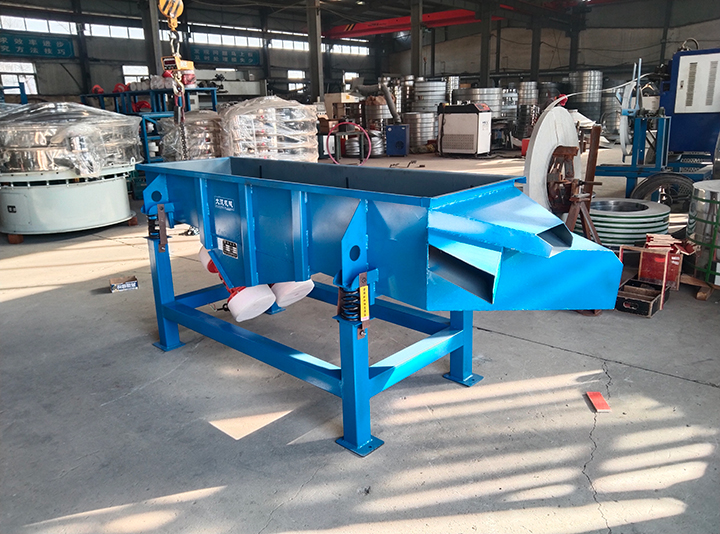
The features of a vibratory screen separator for resin powder are reflected in its screening accuracy and operational flexibility. The equipment can remove lumps, fibrous impurities, and unmelted particles from resin powder, resulting in a more uniform and fine powder. The vibration parameters are optimized, causing the material to move in a three-dimensional swirling motion on the screen surface. Small particles can quickly pass through the screen, while remaining on the screen for a sufficient time to facilitate fine screening. Because resin powder particles are light and have poor flowability, screening can sometimes be difficult. The vibration intensity of the equipment is adjustable; operators can adjust the vibration frequency and amplitude according to the moisture and viscosity of the powder to maintain stable screening. The direction and shape of the discharge port can also be customized according to the production line requirements, allowing for smooth material discharge and seamless integration with automated production lines. This ensures smooth screening operations during continuous production, reducing downtime and screen blockage. The overall design makes powder processing more efficient and easier to operate.
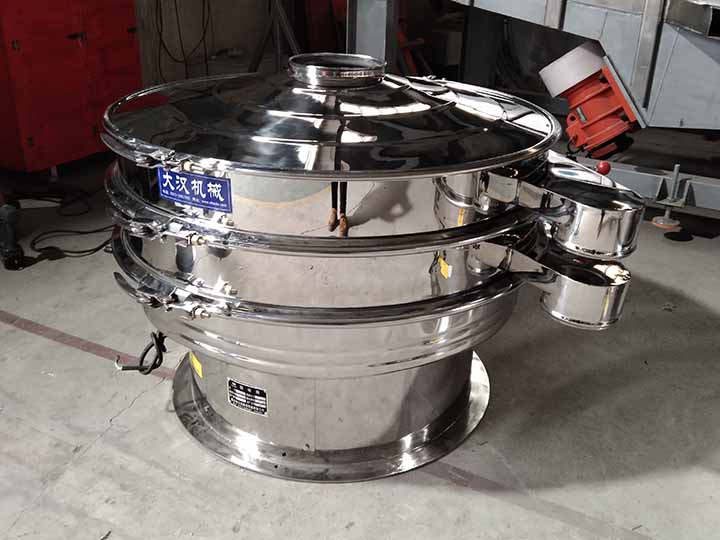
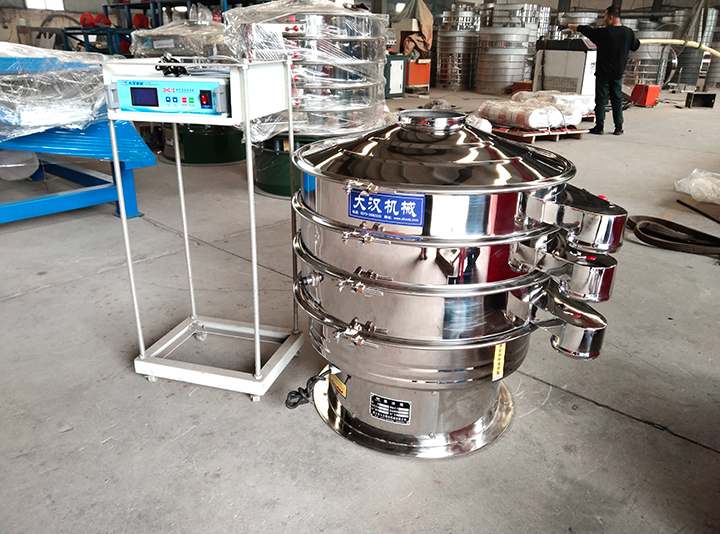
Vibratory screen separator for resin powder can be divided into two types: rotary vibrating screens and ultrasonic vibrating screens. Rotary vibrating screens have a relatively simple structure and are easy to maintain. They are suitable for processing resin powders with low mesh sizes and many impurities. Typically, the sieve mesh size ranges from 20 to 400 mesh, and the diameter varies from 400mm to 1800mm. Models like DH-600 and DH-1000 are common. Screening capacities range from 50 kg/hour to 3000 kg/hour depending on the diameter.
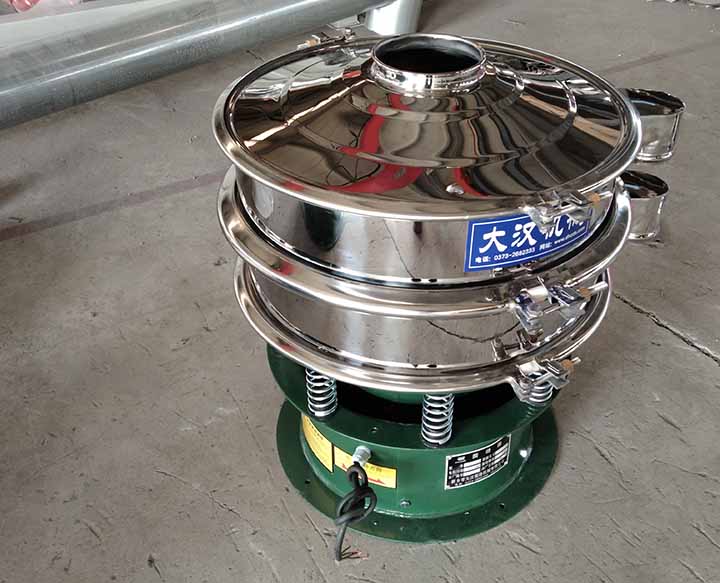
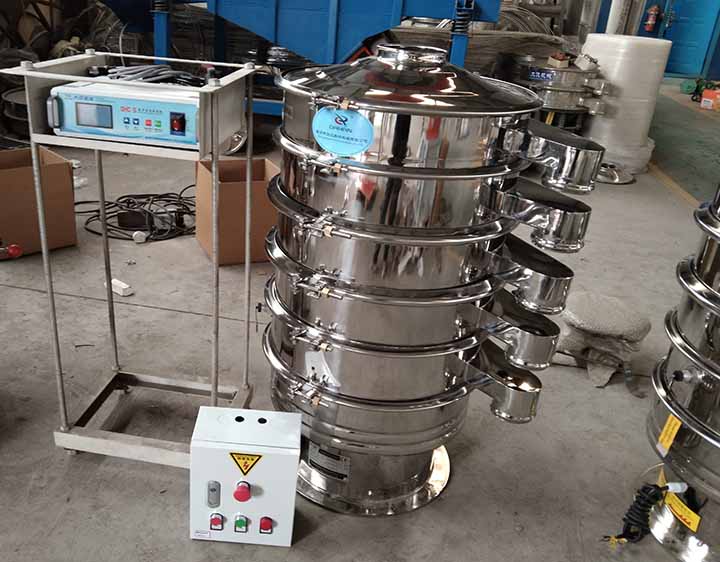
Ultrasonic vibrating screens are suitable for processing ultrafine powders. They are based on rotary vibrating screens and equipped with ultrasonic transducers. High-frequency micro-vibrations cause the screen mesh to vibrate slightly, helping to disperse resin powder and reducing particle agglomeration and screen clogging, especially effective at mesh sizes above 600 mesh. Although more expensive than rotary vibrating screens, they offer higher screening accuracy and more stable operation when processing fine powders and difficult-to-sieve materials, making them suitable for production scenarios requiring high powder uniformity and fineness.
| Model |
Diameter (mm) |
Feeding Size (mm) |
Frequency (RPM) |
Layers |
Power (kw) |
Capacity (kg/h) |
|
| DH-400 | 400 | <10 | <1500 | 1-5 | 0.18 | 100 | |
| DH-600 | 600 | 0.25 | 200 | ||||
| DH-800 | 800 | 0.55 | 500 | ||||
| DH-1000 | 1000 | 0.75 | 800 | ||||
| DH-1200 | 1200 | 1.1 | 1200 | ||||
| DH-1500 | 1500 | 1.5 | 1800 | ||||
| DH-1800 | 1800 | 2.2 | 2000 |
A vibratory screen separator for resin powder has numerous applications in resin production and processing, extending to downstream industries. In the resin raw material stage, the equipment is used for particle size classification and impurity removal of resin powders, resulting in more uniform raw material particles and providing a stable foundation for subsequent processing and batching. In plastics processing, it can process resin powders such as PVC and MBS, providing qualified raw materials for pipes, films, injection molded parts, and other products. In the pharmaceutical industry, models made of 316L stainless steel can finely screen pharmaceutical powders such as ion exchange resins and acrylic resins, meeting GMP production standards. Furthermore, the equipment is also used in the coatings and adhesives industries, performing fine classification of powders to ensure more stable product performance and a better user experience. Overall, it helps companies maintain raw material consistency and seamlessly integrates into production lines across different processing stages, improving overall operational efficiency.
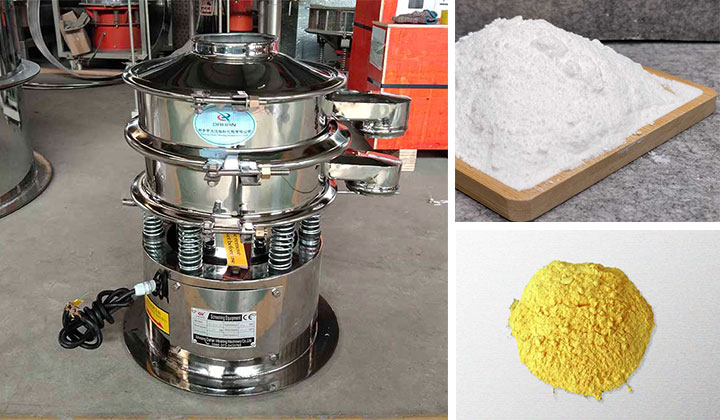
As an industrial screening machine, the vibratory screen separator for resin powder is frequently used in resin powder processing. While conventional vibrating screens can maintain screen flow by adding bouncing balls or rotating brushes, ultrasonic vibrating screens prevent fine particles from easily sticking to the screen when powder adhesion is severe or the screen becomes clogged. The equipment uses optimized damping springs and precision bearings, along with a soundproof enclosure, to keep operating noise within industrial standards. The new quick-release screen frame design makes screen replacement easier, completing the process in under 10 minutes without special tools. The screen frame is evenly tensioned, extending screen life. Overall, it demonstrates durability, flexibility, and ease of operation in resin powder processing, helping companies improve production efficiency and product consistency.
SIEVING MACHINE | INDUSTRIAL VIBRATORY SCREEN SEPARATOR | GRADING EQUIPMENTS SUPPLIER - DAHAN MACHINERY
HEED HELP?
Our professional assistants are trying to help you.